Nuclear Magnetic Resonance and Its Applications in Agriculture and Food Science
Nuclear magnetic resonance spectroscopy (NMR) is a unique method of chemical analysis. It is best known as a technique for determining molecular structures, while its use for quantifying compounds in mixtures is less widely recognized.
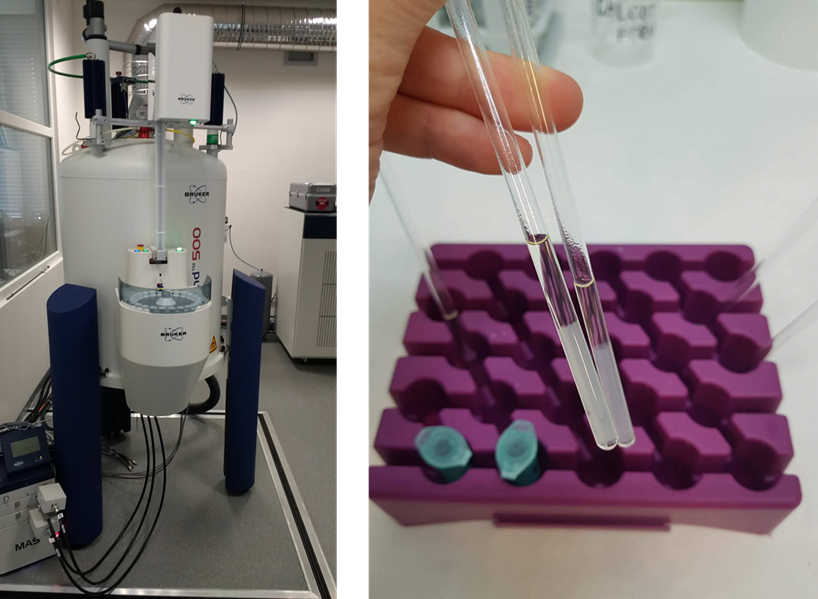
NMR 500 MHz instrument at the Department of Food Quality and Safety
The method is based on the absorption of radiofrequency electromagnetic radiation by the nuclei of certain atoms in molecules placed in a magnetic field. The most commonly analysed nuclei in our laboratory are hydrogen (1H) and carbon (13C). 1H NMR is most frequently used for quantifying substances in mixtures. Depending on their chemical environment and the presence of other nuclei, hydrogen nuclei are shielded to different degrees by surrounding electrons. This shielding causes a shift in the resonance frequency and, consequently, in the position of the signal in the spectrum. Deshielded nuclei appear further to the left in the spectrum than shielded nuclei, such as those forming part of aliphatic carbon bonds, which exhibit a smaller chemical shift and therefore appear closer to 0 ppm.
In practice, the sample is converted into a liquid, solid particles are removed, and the sample is transferred into an NMR tube. After an analysis lasting approximately 20 minutes, a spectrum is obtained containing well-resolved signals from individual hydrogen nuclei in different molecules. Each molecule therefore produces several signals. Each proton appears at a particular position on the x-axis, which represents the chemical shift, usually between 0 and 8 ppm. The axis is expressed in parts per million relative to the absolute operating frequency of the magnet, which in our case is 500 MHz. Signal intensity indicates the number of nuclei present in a similar chemical environment. In complex mixtures, signals from the nuclei of many molecules may overlap. In addition, signals may be split into multiplets because of spin–spin interactions with neighbouring protons. The characteristic shape of a signal can therefore help identify overlapping signals unambiguously.
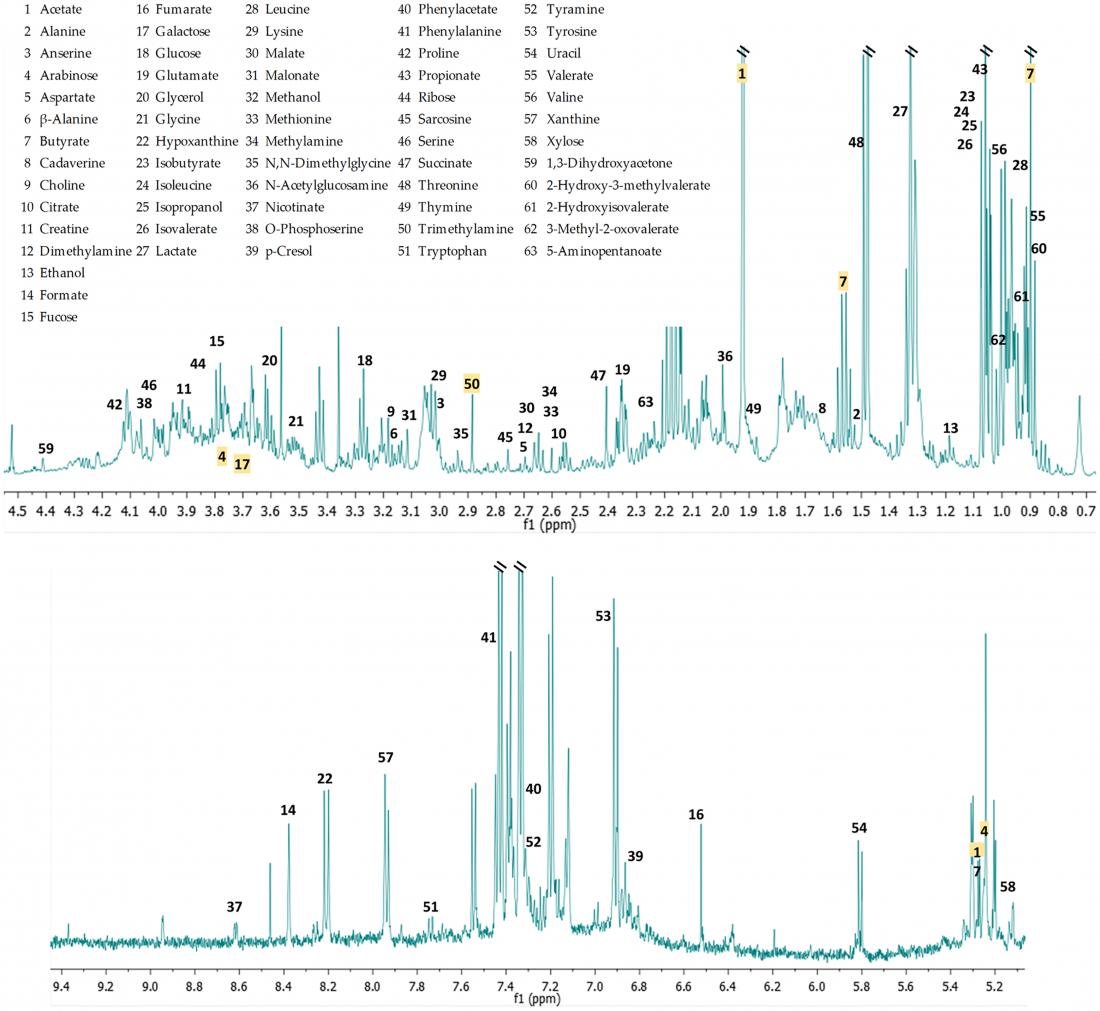
Example of a 1H NMR spectrum of human stool. Selected isolated peaks are labelled. For clarity, the spectrum is divided into two sections shown at different magnifications. The upper section primarily contains signals from sugars, short-chain fatty acids and amino acids, whereas the lower section contains phenolic compounds and purines
The resulting spectra can be processed in two ways. First, they can be treated as complete profiles, with multivariate statistical methods, ANOVA or paired tests used to identify peaks that differ significantly between control and treatment groups. The second option is direct quantification of compounds in the spectra based on peak intensities. Software such as Chenomx can be used for this purpose. One advantage of NMR is that its signal responses are absolute; therefore, quantification of known substances does not require individual analytical standards or calibration curves. The principal disadvantage of NMR is its relatively low sensitivity. It usually detects only analytes present at concentrations above approximately 20–100 µg/mL. Its advantages include robustness, absolute quantification and the ability to determine unknown molecular structures.
Examples of NMR applications include the analysis of sugars and organic acids in fruit, amino acid composition in meat, rosmarinic acid in rosemary, caffeine in coffee, quercetin in onions and isoflavonoids in soybeans. The following sections present some of our projects and demonstrate the capabilities and resources available for NMR analysis.
Detection of Milk Adulteration Using NMR
Goat’s milk is a popular alternative to cow’s milk and may offer certain health benefits. Because it is more expensive, however, it is frequently adulterated with cow’s milk. NMR can be used to quantify at least 52 compounds in milk. Untargeted multivariate statistical analysis can clearly distinguish cow’s milk from goat’s milk. As part of a project funded by the Ministry of Agriculture, we developed an NMR-based method capable of detecting milk adulteration with high accuracy based on the presence of N-acetylglucosamine signals. Rysova et al. (2021)
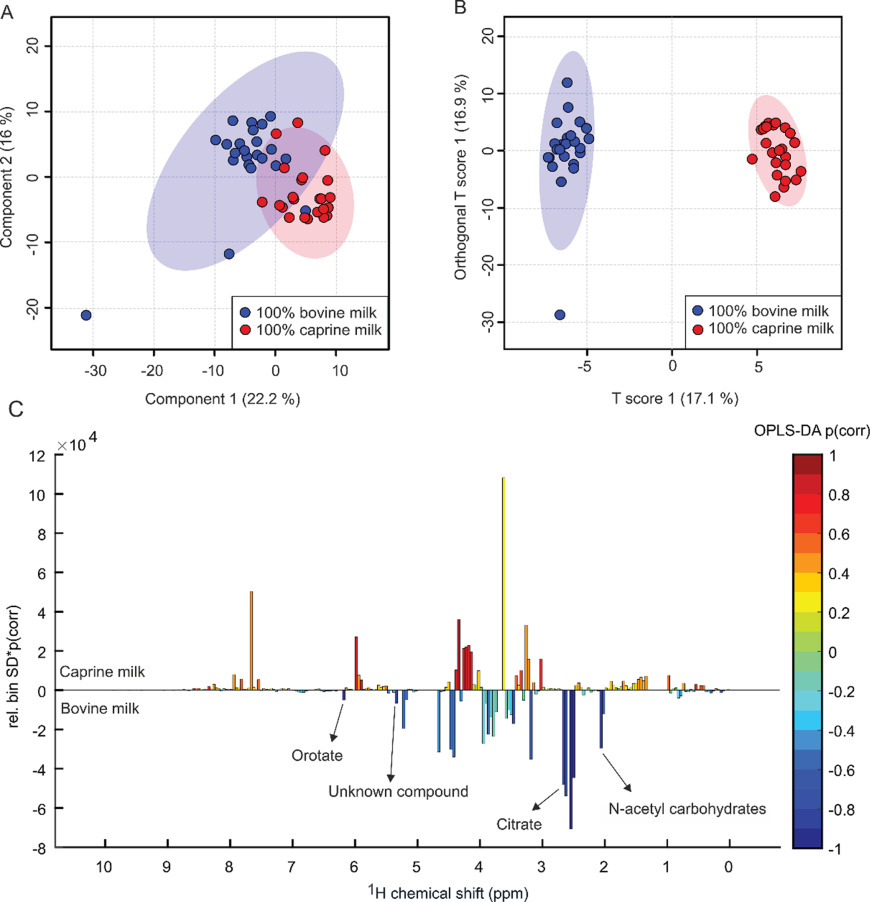
Principal component analysis and partial least-squares discriminant analysis of goat’s- and cow’s-milk samples reveal substantial differences between them. The loading plot shown below identifies the most important peaks in the spectrum, with colour intensity indicating their contribution to discrimination.
Metabolism of Polyphenols in the Human Colon
Polyphenols play an important role in the diet as antioxidants and have beneficial effects on cardiovascular health. However, evidence indicates that biologically active forms of these compounds may only be produced through the activity of bacteria in the colon. Under in vitro conditions, we simulated fermentation processes occurring in the human colon using small vials containing a medium inoculated with human stool. Among other components, the vials contained low concentrations of various polyphenols—antioxidants found in fruit and vegetables. After 24 hours, the contents of the vials were analysed using LC–MS, NMR and Illumina next-generation sequencing. The objective was to determine how the presence of polyphenols affected intestinal fermentation and which metabolites were produced from these compounds.
We found that the polyphenols were rapidly metabolized into other compounds, although this process occurred more slowly in older adults. Some polyphenols, such as silymarin, slowed fermentation and sugar utilization and caused minor changes in microbial composition.
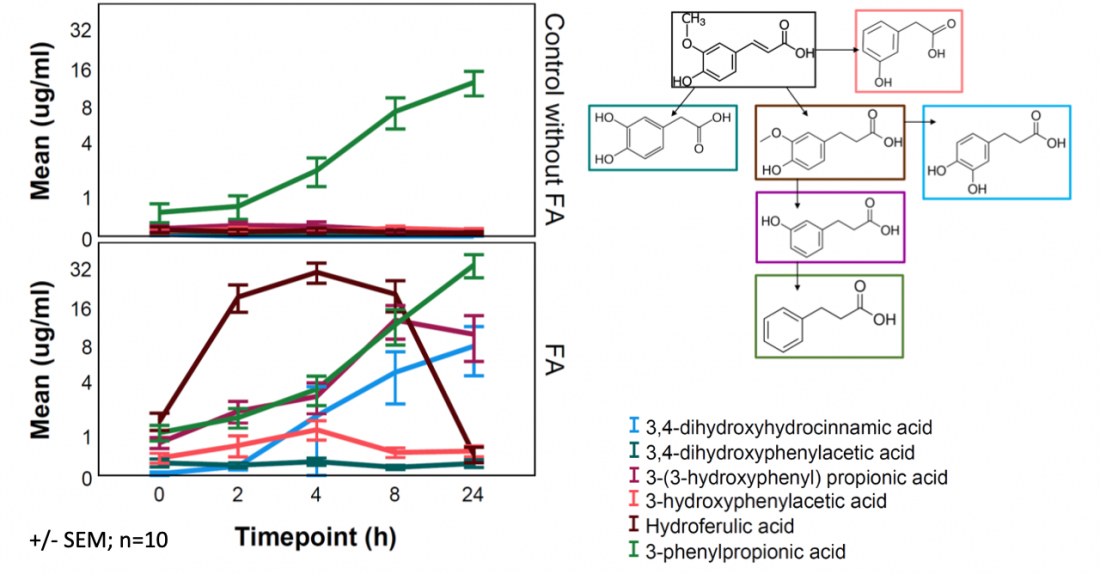
In the in vitro colon model, ferulic acid was metabolized into several compounds. The principal product was 3,4-dihydroxyphenylacetic acid, which was subsequently metabolized to form 3,4-dihydroxyhydrocinnamic acid. Ferulic acid is one of the principal dietary antioxidants and is consumed mainly through coffee and cereal products. All metabolites involved in the reaction were quantified using NMR.
Determining the Variety, Origin and Sensory Properties of Wine Using NMR
Owing to its traditions, historical circumstances and terroir, the Czech Republic produces a remarkably diverse, distinctive and unique range of wines. Wine quality has improved substantially in recent years, partly because of stricter legislation and rigorous controls of geographical origin. The Wine Salon of the Czech Republic presents a collection of the 100 best Moravian and Bohemian wines selected from nearly 2,400 competing wines. We established a collaboration with the Wine Salon and are developing a database of 1H NMR spectral profiles of wines.
These spectra provide information about the concentrations of sugars, organic acids, amino acids, alcohols and numerous other compounds. Machine-learning methods can be used to determine sugar and alcohol contents from the spectra and to predict the likely grape variety or geographical area of origin within the Czech Republic. We published the results of this analysis in Food Chemistry (Mascellani et al., 2001).
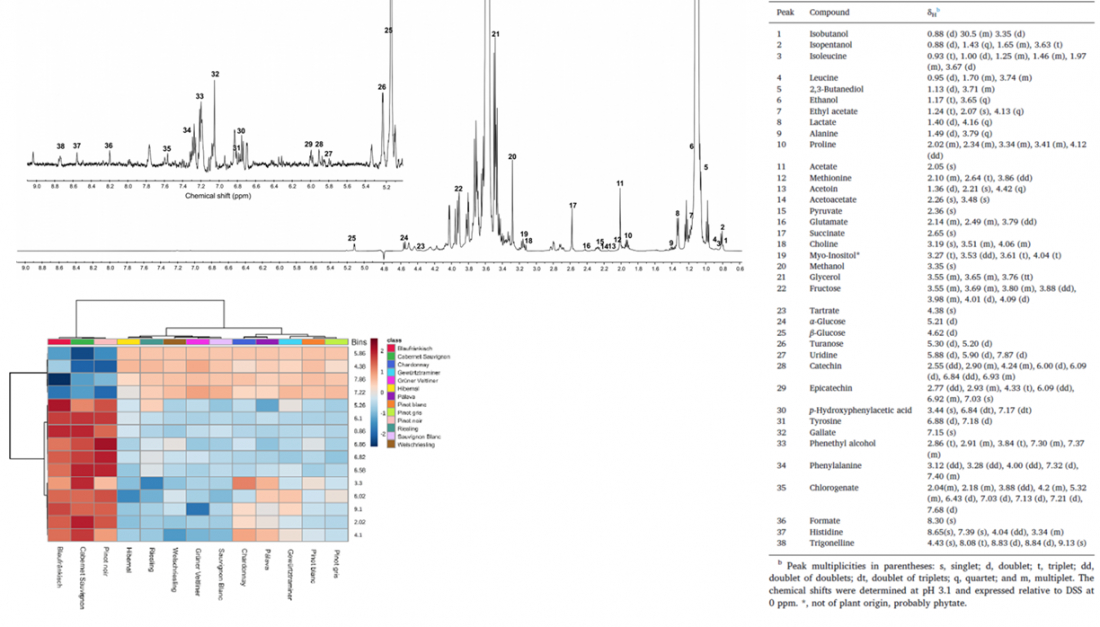
Example of a 1H NMR spectrum of wine, identified metabolites and cluster analysis representing similarities among the sample spectra. Interestingly, samples identified as similar on the basis of their spectra are also genetically related.
Applications of NMR in Honey-Bee Biology
Research into honey-bee biology and biochemistry has major economic and environmental significance. Managed honey bees, Apis mellifera, are among the most important pollinators of crops in modern intensive agriculture. Without their contribution, much of the fruit and vegetables in our diet would be unavailable. Honey-bee health is therefore understandably monitored very closely.
Approximately 50–60 compounds can be monitored in honey-bee organisms using NMR. 1H NMR thus offers an entirely new approach for monitoring physiologically important periods in honey-bee development. For example, it can be used to assess a colony’s preparedness for winter and to monitor biochemical changes during nectar flows, pathogen-induced stress and swarming. NMR also has the potential to reveal why some colonies are more susceptible to disease than others.
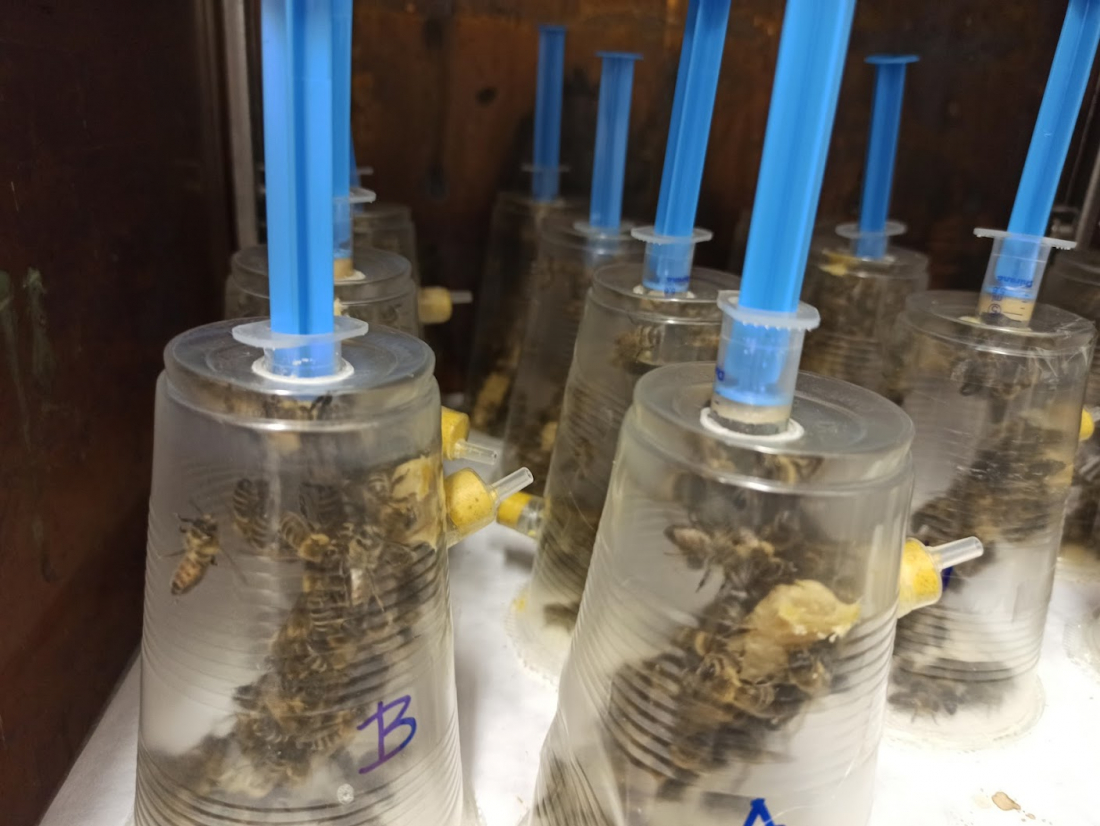
Honey bees in a cage experiment in which they are provided with different experimental diets. The bees are subsequently euthanized, their digestive tracts are removed, and the remaining tissues are homogenized and analysed using NMR.
Honey-bee homogenates differ so substantially among individual months that we can determine the month in which the bees were collected. As an example, the figure below presents a principal component analysis of bees collected during summer and autumn.
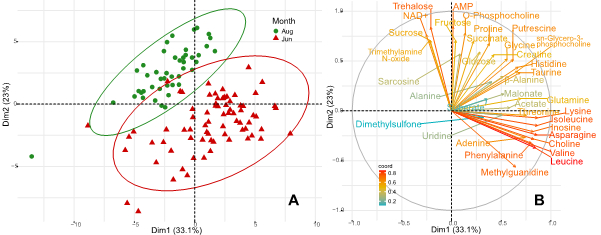
PCA of groups of bees collected in summer and autumn shows that bees emerging in autumn contain lower levels of branched-chain amino acids and free choline, but higher levels of sugars, TMAO and NAD+
NMR Analysis of Powdery-Mildew Resistance in Gerberas
Gerberas are among the world’s most popular cut flowers. The flower trade is particularly important to the Netherlands, which exports flowers worth approximately EUR 10 billion annually. However, ornamental-flower production involves the extensive use of fertilizers and pesticides and has consequently attracted substantial criticism.
Growers are therefore interested in research into mechanisms of resistance against powdery mildew, one of the most serious plant pathogens, and in tools capable of identifying resistant cultivars at the seedling stage.

Selection of gerberas offered by Schreurs, the Netherlands: https://www.schreursgerbera.com/products
Our partner at Wageningen University, Dr Kirsten Leiss, provided us with two sets of leaves from resistant and susceptible cultivars. We recorded 1H NMR spectra of the extracts and compared them to determine how their chemical profiles differed. The resistant cultivars contained higher concentrations of sorbic acid lactones, phytochemicals known for their inhibitory effects against fungi. Detailed analysis of the spectra also enabled us to determine the structures of the metabolites clearly. One of these metabolites is a previously unknown compound.
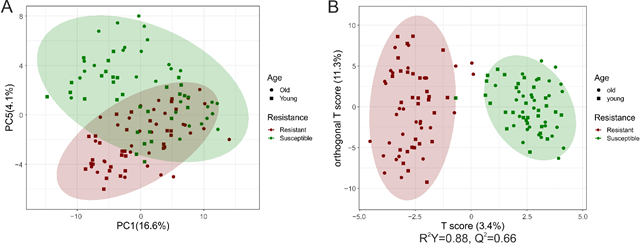
PCA and OPLS-DA of differences between resistant and susceptible gerbera leaf extracts.
NMR Analysis of Biological Fluids in Clinical Diagnostics
We collaborate with the University of Glasgow, the Second Faculty of Medicine and Motol University Hospital, Tampere University. We were also involved in clinical studies such as DiPP through the Horizon 2020 HEDIMED project, of which we are a consortium member. Our projects investigate the possible microbial origins of Crohn’s disease, the effects of therapeutic nutrition in inflammatory bowel disease and the factors involved in the development of coeliac disease. In all these projects, we serve as a partner specializing in the NMR-based analysis of clinical samples, particularly stool metabolomics.
Why is analysing stool composition important? Stool reflects both our diet and the microbial community inhabiting the gastrointestinal tract. Many diseases are caused by intestinal microbial dysbiosis or themselves lead to dysbiosis. For example, a dysbiotic microbiota may produce toxic compounds in the colon, including biogenic amines such as putrescine, cadaverine and trimethylamine N-oxide. These compounds may subsequently enter the body and affect human health

Statistical comparison of the NMR stool profiles of children following milk-free and milk-containing diets shows a higher abundance of sugar signals between 5.0 and 5.5 ppm; this difference is also statistically significant.
NMR Analysis of Primate Faeces
In collaboration with the Institute of Vertebrate Biology and the University of Minnesota, we analyse faecal samples from lowland gorillas. Gorillas are closely related to humans, and findings from research into their nutrition may therefore be relevant to humans. Despite following a predominantly plant-based diet, gorillas kept in captivity frequently develop diabetes. Because the microbiomes of captive and wild gorillas differ, a possible causal role of the microbiome has been proposed.
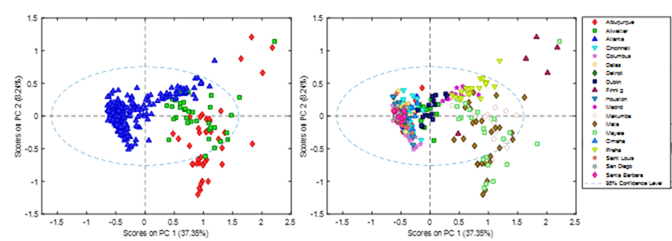
The 1H NMR faecal metabolome of wild gorillas differs markedly between the dry and rainy seasons. By contrast, zoo gorillas exhibit a completely different faecal metabolome, as demonstrated by PCA. These differences are probably attributable to diet and microbiota. Wild gorillas consume more fibre and phenolic compounds. In the figure on the right, the data points are identified according to the origin of the samples. Interestingly, however, the metabolome of gorillas from Prague Zoo closely resembles that of wild gorillas.


Gorillas diagnosed with diabetes mellitus have significantly lower faecal concentrations of certain amino acids, although their overall metabolic profiles remain relatively similar.